 MOGA World
Welcome Code Plus Black Friday Sale: Check Whether They Stack Before 27 November
Your Black Friday sale starts on 27 November. Your welcome mail still says “10% off your first order”. Both were set up months apart, by you, for good reasons. Nobody checked what happens when a new customer meets both on the same checkout. This article is that check: what discount stacking is, a worked margin example, the 10 minute test, and how Claude can run the math so you only make the decision.
What welcome code stacking is
Welcome code stacking is when a first order discount code and a sale price apply to the same item at the same time, so the customer pays less than either offer was meant to allow. Whether it happens is a setting on the code and the sale, and the default is not the same on every platform, so the only safe answer is to test your own checkout.
Want the weekly checks in one place first?
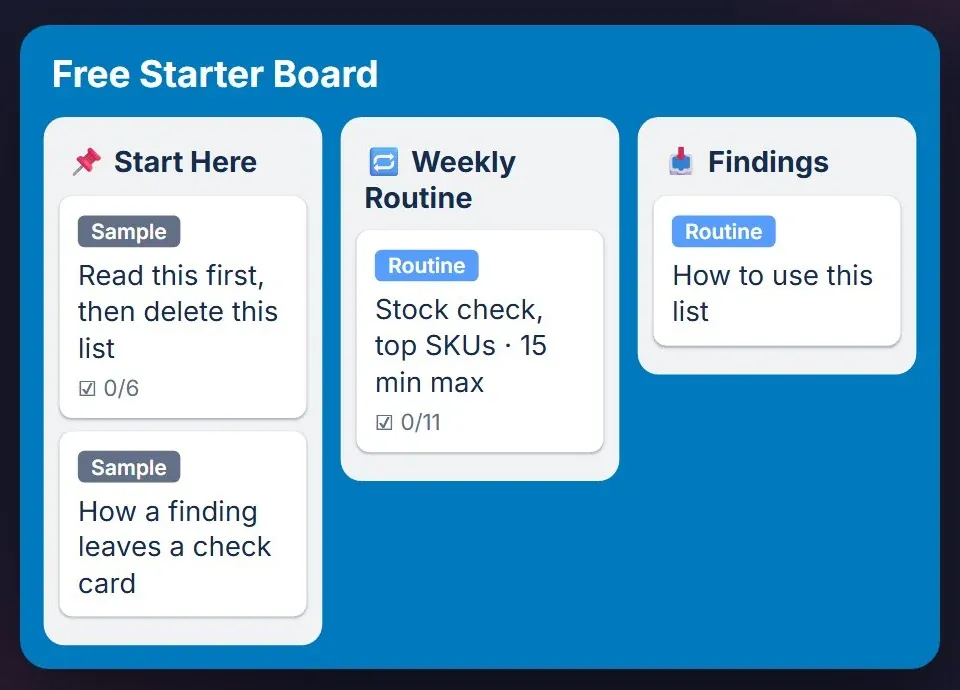
The free starter board is a Trello board with a weekly routine, where a “discounts live this week” check can sit next to your stock check. Free, no card details.
What stacking costs: a worked example
A 30% sale plus a 10% welcome code is not 40% off, it is 37% off, and on a thin margin that is the difference between a profit and almost nothing. Here is one invented product so you can swap in your own numbers:
| Step | Price | Cost, fees and shipping | Margin left |
|---|---|---|---|
| Normal price | EUR 100.00 | EUR 58.00 | EUR 42.00 (42%) |
| Black Friday sale, 30% off | EUR 70.00 | EUR 58.00 | EUR 12.00 (17%) |
| Sale plus welcome code, 10% more | EUR 63.00 | EUR 58.00 | EUR 5.00 (8%) |
Now the weekend. Say 40 first time customers a day buy this product over the 4 days from Friday to Monday. That is 160 orders. At the sale price you keep EUR 1,920. With the code stacked you keep EUR 800. The EUR 1,120 difference is real money, and you would not see it in a sales report that only shows revenue.
The silent part is the problem. Each order looks fine, the sale was a success, and a margin problem found in December has already been paid for. This is why a written procedure for the week before a sale beats remembering.
The 10 minute check before the sale goes live
List every discount that can be live on 27 November, read how each one combines with the others, then buy your own product at the sale price using the welcome code. The steps, in order:
- List every live discount. Sale prices, automatic discounts, the welcome code from your mail tool, any influencer or affiliate code, free shipping rules. People forget the last two.
- Read the combine setting on each. Most platforms, Shopify and WooCommerce among them, let you choose whether a code works together with other discounts. Write down yes, no or unclear for every pair.
- Test with a fresh email address. Put one sale item in the basket, apply the welcome code, and read the total. A welcome code often only works for a first order, so an old account will not show it.
- Compare the total with your floor. Your floor is the lowest price you accept for that product, cost and fees included. If the stacked total is under it, you have a collision.
- Write the result on a card. Which pair stacks, by how much, and what you decided. Next year you will want it.
What Claude can do in this check, and what stays yours
Claude can read your discount list and a sheet of costs, then calculate the margin for every combination and flag the ones under your floor. It cannot place a test order for you, and it does not change a code. That split is the whole point. The reading and the arithmetic are the slow, error prone part. The decision is yours.
In practice: you export your discounts and paste your costs into one folder, and ask Claude for a table of every pair, with the margin at the sale price. It answers in a minute, and it can be wrong, so you check the three worst rows by hand. If you have not used Claude for this kind of work, Claude for a small business explains the setup in plain words, and will Claude Code change prices without asking covers why nothing changes without your Go.
Three ways to fix a collision
Pause the welcome code for the sale, exclude sale items from it, or accept the stack knowingly with a floor price. Which one is right depends on your numbers:
- Pause the welcome mail code until the sale ends. Simplest. You lose a small nudge for new subscribers over a weekend where the sale already does the nudging.
- Exclude sale items from the code. The code still works on full price products. It needs a setting on the code, and then a test order to prove it took.
- Accept it, on purpose. If the margin at the stacked price is still above your floor, a bigger first order discount can be a fine way to win a customer. The word that matters is “knowingly”.
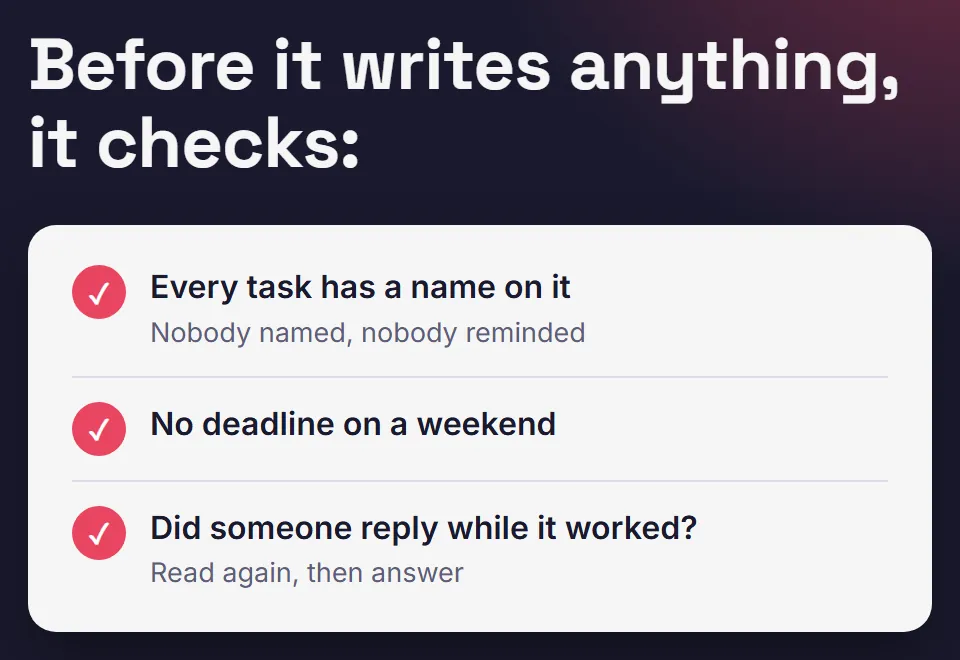
Whatever you pick, write the rule down once. When a rule is broken twice, I turn it into a check that runs before anything goes out. That is the habit, and it is the same one this article uses.
Questions people ask
Does a welcome discount code stack with a Black Friday sale?
It depends on the combine setting of the code and the way the sale is applied, so test your own checkout. A sale set as a lower price on the product behaves differently from a sale set as an automatic discount. Either can combine with a code, and only a test order shows which one you have.
Should I turn off my welcome code during Black Friday?
Turn it off if the stacked margin falls under your floor, and keep it if it does not. Do the math in the table above with your own numbers. Do not guess from the percentages, because a 10% code costs more on a 17% margin than on a 42% one.
How do I find out if it already happened?
Filter last month’s orders by the welcome code and look at the item price on each. Any order where a sale price and the code both appear is a stack. Count them and multiply by the extra discount, and you have the cost so far.
Do I need Claude for this?
No, a spreadsheet and a test order do the same job. Claude saves the typing when you have many products and many codes, and the check is still yours to read.
See what a decision looks like before you build anything
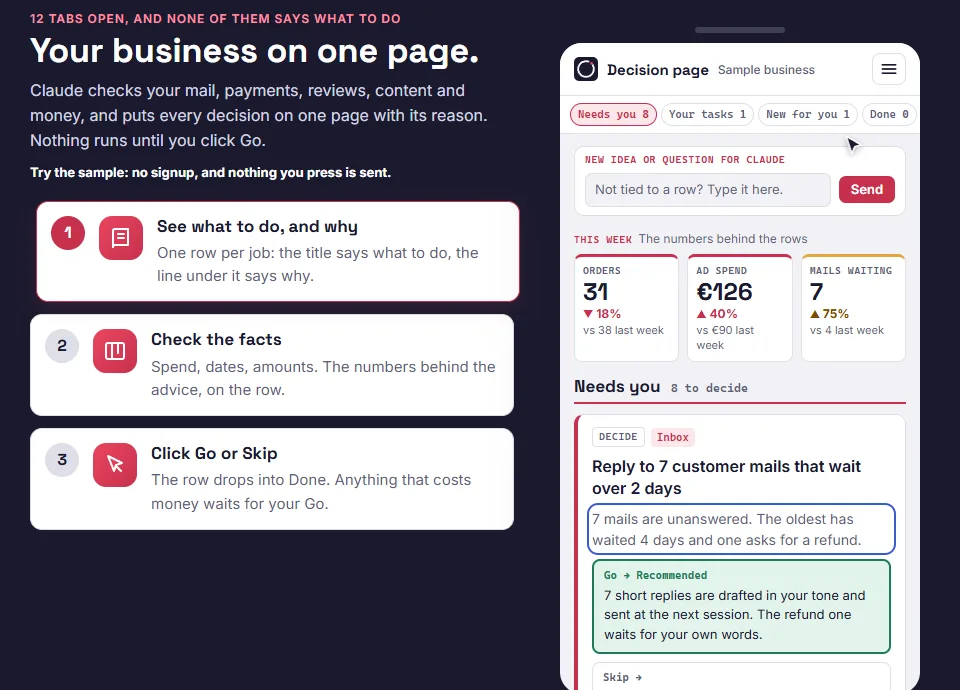
The free sample page shows one page of decisions with sample data, each with a Go and a Skip button. Nothing you press is sent, and there is no signup.
Or check your website for free, see the packs and prices, or book the free intro call and tell me which discount worries you.
Read next: one Trello board for stock, supplier orders and returns, the 6 procedures to write first, or Claude for a small business.
MOGA World is independent and not affiliated with Anthropic or Atlassian. The product, prices and order counts in this article are invented examples. Check your own platform’s discount settings. Questions: stef@mogaworld.co