 MOGA World
Claude Code Skills for an Online Business: 5 That Save Time, 3 That Are Not Worth It
Search for Claude Code skills and you find lists of skills for developers: code review, tests, commit messages. If you sell products online, none of that is your week. Your week is stock, suppliers, margins and returns. This article is about which of those jobs are worth turning into a skill, and which are better left as a card on a board.
Want the jobs without building anything? The free sample page shows the stock check as a decision: See the free sample page
What a Claude Code skill is
A Claude Code skill is a saved set of written instructions that Claude loads when a job matches it, so you stop re-explaining the same procedure in every chat. It is a plain text file in a folder inside your project. Claude Code runs as a chat window in VS Code, a free editor app, so there is no terminal to use.
A skill holds a procedure. It is not the place for facts. Your margin floor, your supplier lead times and your returns window belong in small memory files that Claude reads at the start of a session. The skill says what to do with them. Keeping the two apart means a changed fact is edited once, not in five skills.
If you want the wider picture of how this fits together for an online seller, Claude for a small business covers the memory folder and the task board. This article is only about the skills.
The test for a skill worth making
Before writing one, I ask three questions.
- Do you do the job at least monthly? A skill you write once and run twice a year costs more to maintain than it saves.
- Can the rule fit on one page? If you cannot write down how it decides, Claude cannot follow it.
- Is a wrong result cheap to catch? Claude's answer should be something you can check in a minute before anything moves.
All five below pass. The three at the end each fail one question.
5 skills worth making
The rules in each are the ones that sit on the Operations board's cards. The sample numbers are invented.
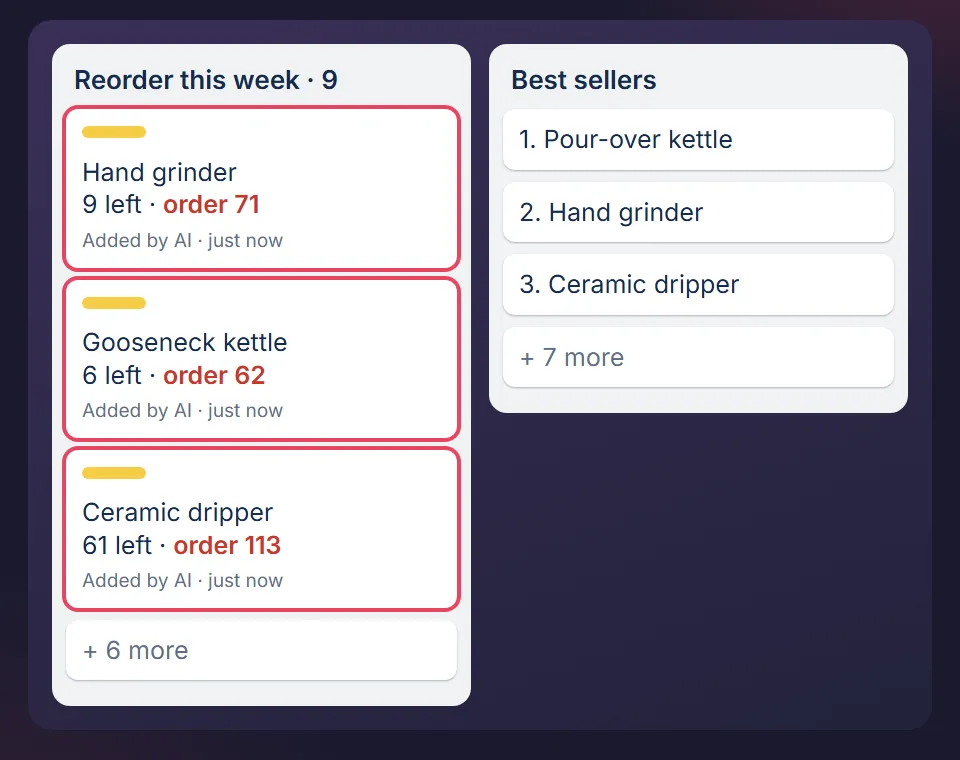
1. The stock check
- What goes inside: reorder point = average units sold per day × the average of the last three real delivery times, in days × 1.5. Exclude promo weeks from the sales window. Count only sellable units. A blank or zero export is a failed read, not good news.
- What it returns: one card per product that will run out before a delivery arrives, with days of stock left.
- Why it earns its place: it repeats every week and the formula never changes.
2. The margin check before a discount
- What goes inside: contribution per unit = selling price minus landed cost minus marketplace fee minus shipping minus expected return cost. Your margin floor lives in a memory file, not in the skill.
- What it returns: a yes or no with the margin after the discount shown.
- Why it earns its place: it catches the expensive mistake of a discount approved on a margin that forgot the marketplace fee.
3. The returns pattern pass
- What goes inside: a product is a pattern at 3 or more returns in 30 days with the same stated reason, or a return rate more than double your catalogue average. One card per pattern, ending in a prevention.
- What it returns: the list of patterns with the buyer comments behind each, so you read the real reason instead of the reason code.
- Why it earns its place: reading 30 days of returns by hand is the job people postpone.
4. The supplier chase draft
- What goes inside: late is measured against the confirmed date. At day 0, 3, 7 and 14 the ask changes, and the ask is always for a specific item such as a container number, never “any update?”.
- What it returns: the list of late orders and a draft mail for each. You send.
- Why it earns its place: chasing never feels urgent on any single day, which is why it slips a week, then three.
5. The listing spot check
- What goes inside: check the main image, title and attribute fields of 3 products a week, against the physical product, not the supplier sheet. If a listing sells, fix only factual errors.
- What it returns: findings per product and per channel, with the 5 minute fixes marked.
- Why it earns its place: the rotation is the hard part, and a skill remembers where you stopped.
3 skills not worth making
1. A skill that places the order
It fails the third question. A stock check that can also order will eventually order on a bad read. The board's stock card puts it this way: “This card detects, it never orders.” Keep the detecting in a skill and the ordering with you. Every money decision needs the supplier card, the minimum quantity, your packaging and your cash, and that is a separate sitting.
2. A skill that changes prices or live listings on its own
It fails the same question. If you ever automate repricing, log what it would have changed for several cycles first, review by hand, and only then let it write. Even then, a queued response is not a finished change. Read the value back from the live listing before you believe it. A skill can draft the change. The Go is yours.
3. A skill for a job you do twice a year
It fails the first question. Reviewing your tools and cost prices twice a year takes about 40 minutes. A card on a board with a checklist does that job well, and a skill you rarely run is a skill nobody remembers to update. A skill is not the only way to keep a procedure. A checklist on a recurring card is the other, and for rare jobs it is the better one.
What about a Shopify MCP connector?
An MCP connector is a ready made link between Claude and another tool, so Claude can read your data from it without you writing the code. If your sales platform ships an official one, check it before building a homemade script, because someone else maintains it. Start read only: orders and products first, one source a week, and never a key that can write until you need it. This article does not review any platform's connector. Check your platform's own documentation for what yours can do.
What you need, and what it costs
- VS Code, a free editor app, with the Claude Code extension.
- A Claude plan that includes Claude Code. Claude Pro is about EUR 18 a month before VAT, paid to Anthropic.
- A free Trello account for the cards the skills write to.
- Nothing connects until you connect it.
Where it stops
- A skill follows a rule. It does not know your business. If the rule is wrong it will be wrong quickly.
- It will not tell you what to sell.
- A skill that is never run is not an asset. If you will not use the job twice a month, leave it on a card.
How I use it
I spent six years running ecommerce businesses and every rule above was written after something went wrong. When a rule is broken twice, it stops being a reminder and becomes an automatic check that runs before anything goes out.
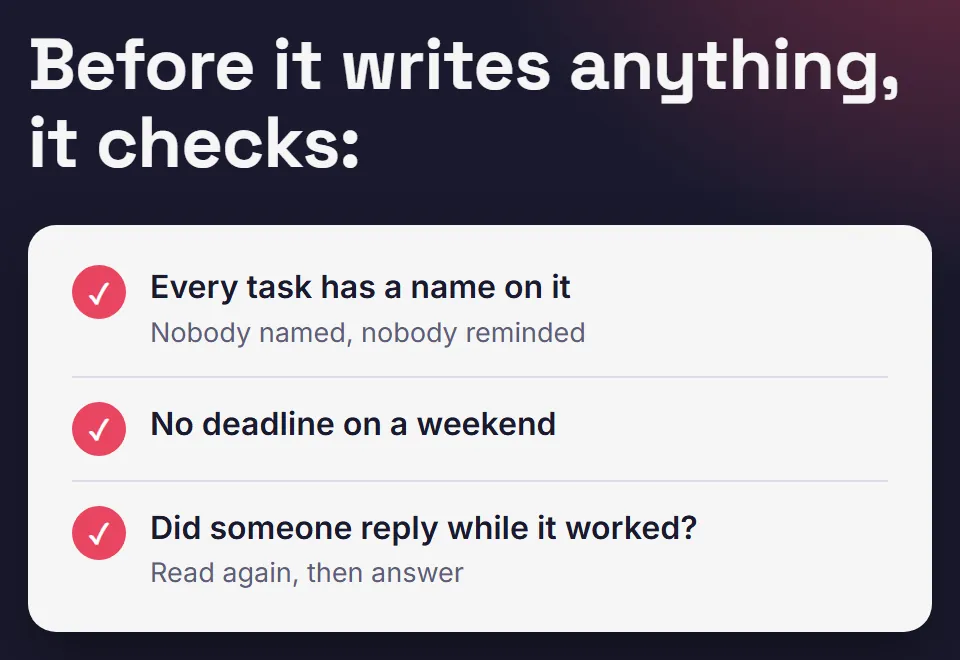
The full setup, rules included, is on How MOGA is run.
Start with one board
The free sample page shows the stock check as one decision, with sample data and no signup. No Claude needed to open it. The free starter board, the Trello version with the stock check card in the same format as the paid boards, is the email step behind it.
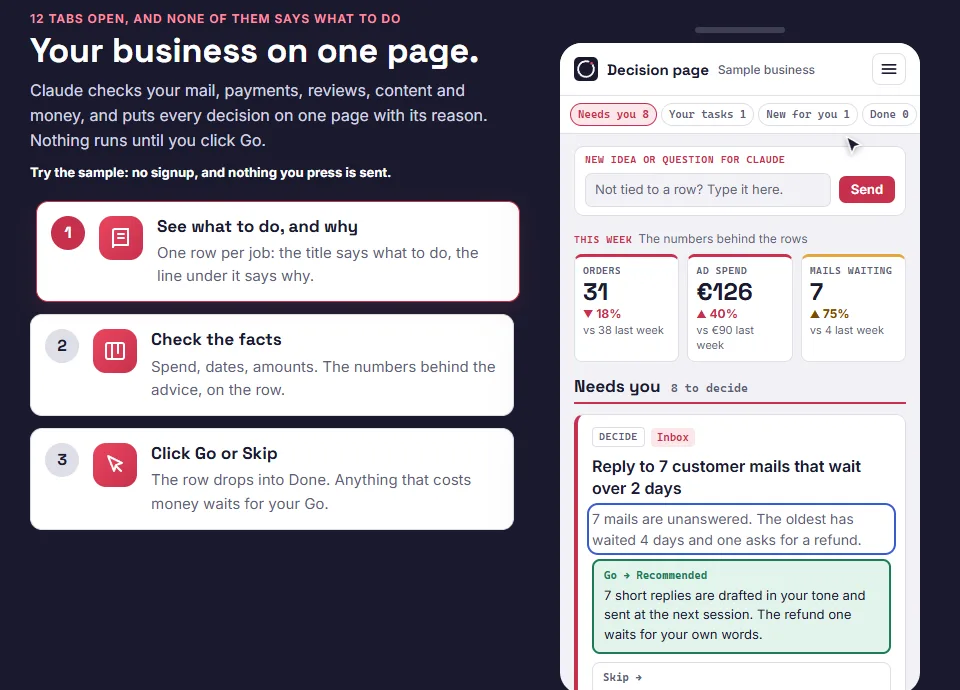
Want the full setup? The Decision Page is EUR 129, one payment.
MOGA World is independent and not affiliated with Anthropic or Atlassian. Sample businesses and numbers in this article are invented. Questions: stef@mogaworld.co